


Ishan Ayurvedic Hospital

Ophthalmology

Netra Chikitsa- Shalakya Tantra

Classical Ayurvedic ophthalmology for dry eyes, computer vision syndrome, and degenerative eye conditions — with Netra Tarpan, a medicated ghee procedure that nourishes the eyes at a depth no conventional eye drop can reach.

  • OPD & IPD available
  • Netra Tarpan
  • Digital eye strain
  • CGHS empanelled
Book a consultation
Available Mon – Sat · 9:00 AM – 2:00 PM
Ayurvedic ophthalmologist performing Netra Tarpan — a medicated ghee eye nourishment procedure.
About the Department

Eye care rooted in 3,000 years of precision

Shalakya Tantra's ophthalmic branch — Netra Chikitsa — is one of the world's oldest documented traditions of eye medicine. Sushruta described 76 eye diseases, 31 surgical procedures, and dozens of ophthalmic formulations over 2,500 years ago — a body of knowledge that remains clinically relevant today, particularly for chronic and degenerative conditions that modern ophthalmology struggles to reverse. At Ishan, the eye department focuses on conditions where Ayurvedic care provides genuine clinical value: dry eyes, computer vision syndrome, early-stage glaucoma supportive care, Netra Tarpan for eye strain and macular health, diabetic retinopathy supportive care, and myopia progression management. All assessment is done alongside modern ophthalmic examination for safe, evidence-informed care. Our signature procedure — Netra Tarpan — involves bathing the eyes in warm medicated ghee retained within a dough dam built around the eye socket. It is unlike anything in conventional ophthalmology: deeply nourishing, immediately calming, and clinically effective for conditions driven by dryness, overuse, and nutritional depletion of the ocular tissues. "The eye is the seat of Alochaka Pitta — the sub-Dosha governing vision. When Alochaka Pitta is depleted by overuse, dryness, or age, the vision deteriorates gradually. Netra Tarpan restores what no eye drop can: the Pitta itself." — Ashtanga Hridayam, Uttarasthana.

  • Netra Tarpan specialist

    Medicated ghee eye nourishment

  • Integrated diagnostics

    Modern eye exam + classical assessment

  • Anjana & Seka procedures

    Collyrium, eye wash & medicated paste

  • Preventive eye nutrition

    Triphala Ghrita & Pitta-pacifying care

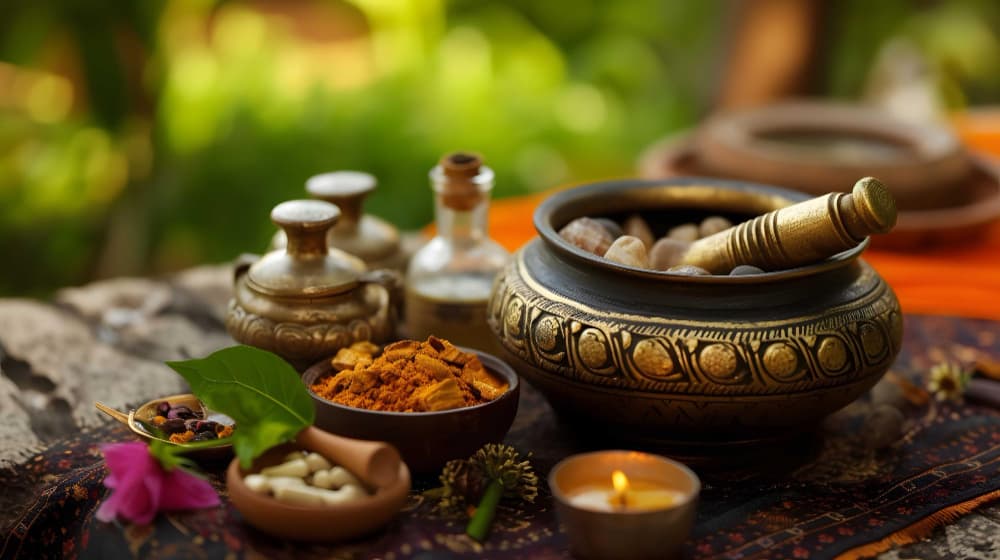
Triphala Ghrita, Anjana and classical Ayurvedic ophthalmic preparations on display.
Therapist preparing the dough dam around a patient's eye for Netra Tarpan.
Conditions treated

Eye conditions we treat

From digital eye strain and dry eyes to glaucoma supportive care and diabetic retinopathy — our ophthalmology department offers Ayurvedic care for a wide range of eye conditions.

Most commonly treated
  • Dry Eyes & Eye StrainShushkakshi / Netra Shrama
  • Computer Vision SyndromeNetra Atiyoga
  • Glaucoma — supportiveAdhimantha
  • Diabetic Eye — supportivePittaja Netra Roga
  • Conjunctivitis & AllergyAbhishyanda
  • Dry Eye & Comfort Disorders

    • Dry eye syndrome (Shushkakshi)
    • Computer vision syndrome / digital eye strain
    • Blepharitis — eyelid inflammation
    • Meibomian gland dysfunction
    • Eye fatigue & burning sensation
    • Photophobia (light sensitivity)
  • Inflammatory & Allergic

    • Allergic conjunctivitis
    • Chronic conjunctivitis
    • Episcleritis & scleritis — supportive
    • Uveitis — supportive adjunct care
    • Pterygium — early stage
    • Stye (Anjananamika) — recurrent
  • Degenerative & Pressure

    • Glaucoma — supportive care & IOP management
    • Early cataracts — progression management
    • Macular degeneration — supportive
    • Diabetic retinopathy — supportive
    • Hypertensive retinopathy — supportive
    • Optic nerve health maintenance
  • Refractive & Visual

    • Myopia progression management in children
    • Convergence insufficiency
    • Eye strain headaches
    • Night blindness (Naktandhata)
    • Colour vision disorders — supportive
    • Post-surgical visual recovery
  • Structural & Surface

    • Corneal opacities — early stage supportive
    • Subconjunctival haemorrhage
    • Watering eyes (Epiphora)
    • Entropion / ectropion — conservative
    • Chalazion (Utsangini)
    • Nasolacrimal duct issues — conservative
  • Neurological & Systemic

    • Diabetic eye disease — supportive
    • Thyroid eye disease — supportive
    • Vitamin A deficiency eye disorders
    • Migraine-related visual disturbance
    • Post-viral visual weakness
    • Amblyopia (lazy eye) — adjunct support
  • Netra Tarpan Indications

    • Dry eyes — primary indication
    • Computer vision syndrome
    • Glaucoma supportive care
    • Early macular changes
    • Eye fatigue in professionals
    • Preventive eye nourishment annually
  • Paediatric Eye

    • Myopia control in children
    • Childhood conjunctivitis
    • Vitamin A supplementation
    • Amblyopia — adjunct support
    • Eye allergy in children
    • Vision screening referral
How We Treat

Why Ayurveda works for eyes — explained simply

Most people with dry eyes have been using artificial tears for years. The drops provide temporary lubrication — but they don't restore the Meibomian gland function or the Alochaka Pitta (Ayurvedic ocular sub-Dosha) that has been depleted. Glaucoma drops lower pressure but don't protect the optic nerve. Glasses correct vision but don't slow myopia. Ayurvedic ophthalmology approaches the eye as a Pitta-dominant organ whose health depends on adequate blood supply, proper ojas reaching ocular tissues, and appropriate rest. Netra Tarpan directly nourishes the ocular tissues with medicated ghee in a way that no eye drop can replicate — because ghee is fat-soluble and penetrates layers of the eye that aqueous drops cannot reach. Patients with dry eyes who have been using artificial tears for years often tell us after a course of Netra Tarpan that their eyes feel genuinely comfortable for the first time — not just temporarily lubricated. There is a difference between replacing a function and restoring it. Netra Tarpan restores.

  • We assess both the eye and its systemic context

    Eye health in Ayurveda is inseparable from systemic health — particularly liver function (Yakrit is the primary organ of Pitta), digestion, and blood quality. Our assessment includes a complete systemic evaluation alongside eye examination to identify the true root cause of your eye condition. A patient with dry eyes due to Pitta aggravation from stress needs a different protocol than one with dry eyes from Vata-caused Meibomian gland dysfunction — same symptom, different root cause.

  • Netra Tarpan — nourishing the eyes deeply

    Warm medicated ghee is retained within a dough dam built around the open eye socket for 10–20 minutes. The eye is bathed in ghee at precisely the right temperature. The fat-soluble nutrients penetrate the corneal epithelium, lubricate the conjunctival surfaces, and nourish the deeper ocular tissues. No conventional eye drop achieves this depth of penetration. The first thing most patients notice after Netra Tarpan is that colours seem brighter and vision clearer — because the corneal surface is properly lubricated and the optical media is nourished.

  • Systematic eye procedures — targeted therapies

    Alongside Netra Tarpan, the department uses Ashchyotana (medicated eye drops), Anjana (medicated collyrium), Seka (eye wash with medicated decoctions), and Bidalaka (medicated paste around the eyes) — each targeting specific layers of the eye and specific conditions. Anjana with Rasanjana (Berberine-containing collyrium) has well-documented antimicrobial and anti-inflammatory properties — used for chronic conjunctivitis and early corneal disorders since Sushruta's time.

  • Diet & systemic care — protecting the eye from within

    Ayurvedic ophthalmology places great emphasis on Pitta-pacifying diet for eye health — avoiding excessive spicy, oily, and acidic foods; emphasising green vegetables, Amalaki (amla), Triphala, and foods rich in Vitamin A. Triphala Ghrita is prescribed both internally and externally for almost all eye conditions. Amalaki (Indian Gooseberry) is the richest natural source of Vitamin C — a powerful antioxidant that protects against cataract formation and retinal degeneration. It is the cornerstone of Ayurvedic eye nutrition.

The Tools We Use

Tools we use for eye care — all working together

Shalakya Tantra ophthalmology at Ishan combines classical Netra Kriya Kalpas with modern ophthalmic diagnostics for safe, integrated eye care.

  • Netra Tarpan — eye nourishment

    Our signature eye procedure — warm medicated ghee (Triphala Ghrita, Mahatriphala Ghrita, or specific formulations) retained within a dough dam over the open eye for 10–20 minutes. Unlike any conventional treatment. Safe, non-invasive, and profoundly effective for dry eye, digital eye strain, and early degenerative conditions. Studies on Netra Tarpan with Triphala Ghrita show significant improvement in tear film break-up time (TBUT), Schirmer's test scores, and patient-reported dry eye symptoms — comparable to prescription dry eye treatments.

    • Eye nourishment
    • Dry eye
    • 10–20 min sessions
  • Netra Kriya Kalpas — eye procedures

    Ashchyotana (medicated drops), Seka (eye irrigation), Bidalaka (medicated paste application), Putapaka (squeezing medicated juice into eyes) — classical procedures targeting specific layers of the eye. Each is matched to the specific condition and Dosha involved. Seka with Triphala decoction is one of the safest and most effective interventions for allergic conjunctivitis and chronic blepharitis — documented antimicrobial and anti-inflammatory activity without antibiotic resistance risk.

    • Eye procedures
    • Anti-inflammatory
    • Dosha-matched
  • Anjana — medicated collyrium

    Classical eye formulations applied as collyrium (Anjana) to the conjunctival surface — Rasanjana (Berberine), Sauvira Anjana, Srotojana — with antimicrobial, astringent, anti-inflammatory, and vision-improving properties. Used for conjunctivitis, corneal conditions, and vision maintenance. Rasanjana contains Berberine — a compound with well-documented antimicrobial activity against common conjunctival pathogens. Traditional use confirmed by modern phytochemical research.

    • Collyrium
    • Antimicrobial
    • Berberine
  • Triphala Ghrita — internal & external

    The foundational Ayurvedic eye medicine — Triphala processed in ghee. Taken internally to improve Pitta metabolism and nourish Alochaka Pitta (ocular sub-Dosha), and used externally in Netra Tarpan. Amalaki, Haritaki, Bibhitaki — each targets specific ocular tissue layers. Multiple studies confirm Triphala Ghrita's antioxidant, anti-cataract, and retinal-protective properties. Regular internal use is recommended for all above-40 patients with a family history of eye disease.

    • Herbs
    • Antioxidant
    • RCT-backed
  • Modern ophthalmic diagnostics

    Visual acuity testing, IOP (intraocular pressure) measurement, fundus examination, slit lamp examination — coordinated with specialist referral where needed. We use modern ophthalmic evaluation alongside Ayurvedic assessment to ensure no condition requiring urgent conventional care is missed. We are clear about what Ayurveda does and does not treat. Acute angle-closure glaucoma, retinal detachment, and eye injuries require immediate conventional care. We refer promptly and do not delay.

    • Diagnostics
    • Visual acuity
    • Specialist referral
  • Diet & lifestyle for eye health

    Pitta-pacifying diet guidance, screen hygiene protocols (20-20-20 rule in Ayurvedic context), Trataka (candle-gazing concentration practice), and annual preventive Netra Tarpan for healthy individuals with high screen exposure. Annual Netra Tarpan is recommended for all individuals with high screen use — preventive maintenance for ocular health. Like servicing a car before it breaks down.

    • Preventive care
    • Lifestyle
    • Trataka
Department Facilities

What's available for you here

Our ophthalmology department offers classical Ayurvedic eye procedures with modern diagnostic capability.

Dedicated Netra Tarpan procedure room with temperature-controlled ghee and sterile dough preparation.
  • Eye OPD

    Daily consultations — dry eye, eye strain, glaucoma review, diabetic eye follow-ups, Anjana prescriptions, and procedure scheduling.

  • Netra Tarpan Procedure Room

    Dedicated procedure room for Netra Tarpan and all Netra Kriya Kalpas — temperature-controlled ghee, sterile dough preparation, trained therapist, post-procedure rest area.

  • Ophthalmic Diagnostics

    Visual acuity, IOP measurement, slit lamp examination, fundus examination co-ordinated with specialist referral. Pre- and post-procedure monitoring.

  • IPD

    Dedicated eye IPD beds for intensive Shiro-Netra Panchakarma courses — combining Nasya, Netra Tarpan, and Virechana in admission-based intensive protocols for complex conditions.

  • In-house Pharmacy — Netra formulations

    Triphala Ghrita, Mahatriphala Ghrita, Saptamrita Lauh, Rasanjana Anjana — classical ophthalmic formulations prepared in-house under pharmacist supervision.

  • Emergency

    24×7 casualty for acute eye emergencies — chemical injuries, eye trauma, sudden visual loss. Immediate triage and referral to emergency ophthalmologist where required.

Real lives. Real healing. Real freedom.

Dry Eye Syndrome — 2 weeks Netra Tarpan
I had dry eyes for 3 years and was using artificial tears 6–8 times a day. After a 10-day Netra Tarpan course at Ishan, I use drops twice a day now. My ophthalmologist confirmed my Schirmer's test improved. I was genuinely surprised.
RS
Rohit SaxenaAge 38 · Noida
Computer Vision Syndrome — IT professional
I work 10 hours a day on screens and had constant headaches, blurred vision, and burning eyes. The Netra Tarpan and dietary changes at Ishan resolved most of my symptoms in 3 weeks. I didn't expect this to work as well as it did.
MV
Mohit VermaAge 34 · Greater Noida

Book Your Appointment

Ready to start your healing journey?
Schedule your appointment today,

🇮🇳 +91

Email  - info@ishanayurved.com

Doctors in Shalakya Tantra

Our physicians combine classical Ayurvedic training with modern clinical insight to deliver integrated, evidence-informed care.

Dr. Jaya Singh

Dr. Jaya Singh

Medical Consultant - ENT (Shalakya Tantra - Netra)

BAMS, MD (Ayu.)

Eye Disorders

9 years experience

Mon-Sat | 9:00 AM - 4:00 PM

Dr. Raakhee Mehra

Dr. Raakhee Mehra

Head of the Department, Senior Consultant - ENT (Shalakya Tantra)

BAMS, MD (Ayu.), PhD, PGDMLS, PGDP

Eye Disorders

30 years experience

Mon-Sat | 9:00 AM - 4:00 PM

Dr. Shabaz Mansoori

Dr. Shabaz Mansoori

Medical Consultant - ENT (Shalakya)

BAMS, MD (Ayu.)

Skin Disorders • Mental Health Issues

10 years experience

Mon-Sat | 9:00 AM - 4:00 PM

Seek medical attention if you experience any of the following

Do not delay consultation if you experience any of these eye-related warning signs:

  • Sudden loss of vision — any eye
  • Chemical or physical injury to eye
  • Eye pain with nausea and halos
Call 8448797705

Frequent Asked Questions

  • Netra Tarpan is a classical Ayurvedic procedure in which warm medicated ghee is retained over the open eye within a dough dam for 10–20 minutes. Most patients with dry eyes or digital eye strain notice clearer, more comfortable vision within the first few sessions. A typical course runs 7–14 days and produces measurable improvement in tear film and Schirmer's test scores comparable to prescription dry eye treatments.

  • Ayurveda provides supportive care alongside conventional treatment for glaucoma and diabetic retinopathy — not a replacement for it. The aim is to stabilise IOP, protect the optic nerve, and slow retinal damage through Netra Tarpan, Triphala Ghrita, and Pitta-pacifying systemic care. Patients continue their prescribed eye drops and ophthalmologist follow-ups throughout.

  • Yes, Netra Tarpan is completely safe when performed by trained therapists. The ghee is filtered, warmed to body temperature, and contained within a sterile dough dam. The eye is bathed gently — there is no pressure or invasive contact. Mild oily vision for an hour afterwards is normal and resolves naturally.

  • Yes. Paediatric eye care is a core focus — myopia progression management, childhood conjunctivitis, eye allergies, and Vitamin A supplementation all respond well to age-appropriate Ayurvedic care. We coordinate with paediatric ophthalmologists for vision screening and refractive correction where required.