“After experiencing a relapse of Ulcerative Colitis, I consulted Dr. Kavita at Ishan Ayurvedic Medical College & Hospital. Within two days of starting Ayurvedic treatment, I experienced significant relief. I sincerely appreciate the excellent care and highly recommend the hospital.”

Purification & Rejuvenation
Panchakarma
Medically supervised detox, purification, and rejuvenation therapies — not a spa. A clinical protocol that removes deep-seated toxins, restores Dosha balance, and rebuilds vitality from the inside.
- OPD & IPD available
- All 5 Shodhan Karmas
- Male & female suites
- In-house pharmacy

Panchakarma — healing from the inside
Panchakarma — literally "five actions" — is Ayurveda's most powerful therapeutic system: a medically supervised protocol of purification and rejuvenation designed to remove accumulated toxins (Ama) from the body's deep tissues, restore Dosha balance, and rebuild vitality from the cellular level upwards. At Ishan, Panchakarma is not a wellness package or a spa experience. It is a clinical department — prescriptions are written by qualified Panchakarma physicians, procedures are performed by trained therapists under medical supervision, and treatment plans are personalised based on the patient's Prakriti, disease, season, and digestive strength. Our Panchakarma wing has both male and female therapy suites, purpose-built procedure rooms, and a full range of classical and additional therapies — supported by our in-house Ayurvedic pharmacy preparing fresh medicated oils and decoctions. "As a lamp burns brighter after its wick is cleaned, the body functions at its highest potential only after Panchakarma removes what has been accumulating silently for years." — Charaka Samhita, Siddhisthana.
All 5 Shodhan Karmas
Vamana, Virechana, Basti, Nasya, Raktamokshana
14/21-day IPD courses
Intensive Panchakarma admission
Male & female suites
Purpose-built, copper-lined Droni
In-house pharmacy
Fresh classical oils & decoctions


Procedures & conditions we treat
Panchakarma encompasses five core purification procedures and dozens of additional therapies — each targeting specific Doshas, conditions, and tissue layers.
- Diabetes ManagementPrameha Chikitsa
- Arthritis & Joint PainAmavata / Sandhivata
- Spine & Back PainKati Roga
- Skin DisordersKushtha Roga
- Detox & RejuvenationShodhana / Rasayana
5 Shodhan Karmas (Core Procedures)
- Vamana — therapeutic emesis (Kapha disorders)
- Virechana — therapeutic purgation (Pitta disorders)
- Basti — medicated enema (Vata disorders — the king of PK)
- Nasya — nasal administration therapy
- Raktamokshana — bloodletting / leech therapy
Additional Therapies (Upkarmas)
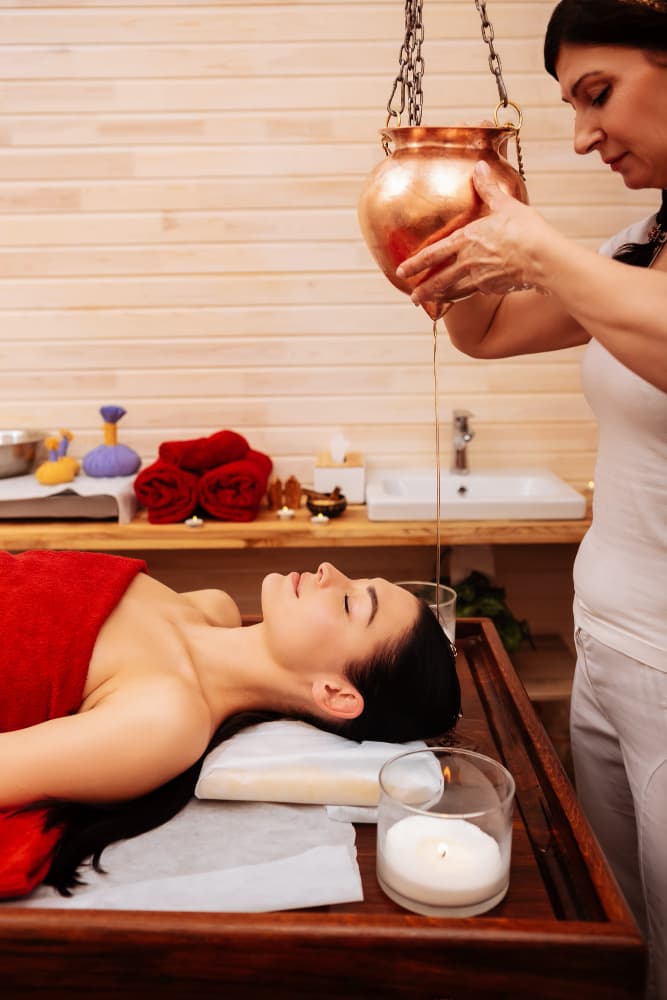
- Shirodhara — continuous oil stream on forehead
- Abhyangam — full-body medicated oil massage
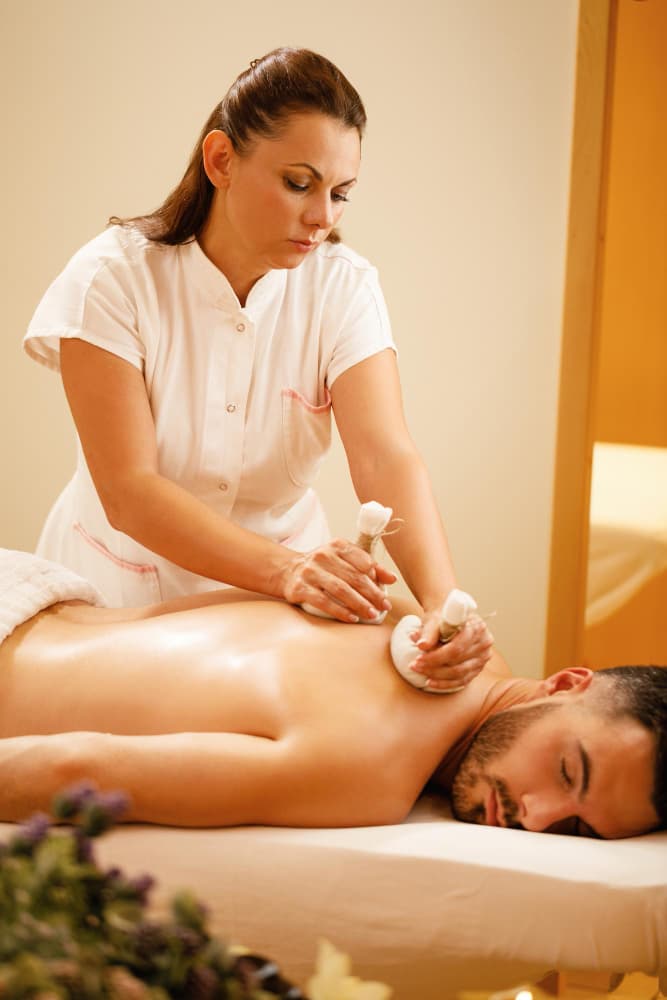
- Pinda Sweda — herbal bolus fomentation
- Janu / Kati / Greeva Basti — joint oil retention
- Netra Tarpan — eye nourishment therapy
- Shiro Abhyanga, Karnapurana, Udwartana
Conditions Treated — Metabolic
- Diabetes Management programme
- Obesity & weight loss
- High cholesterol
- Thyroid disorders
- Fatty liver — supportive
- Post-COVID fatigue & weakness
Conditions Treated — Musculoskeletal
- Osteoarthritis (Sandhivata)
- Rheumatoid arthritis (Amavata)
- Sciatica (Gridhrasi)
- Back pain & spondylosis
- Cervical spondylosis
- Frozen shoulder (Avabahuka)
Conditions Treated — Skin & Neurological
- Psoriasis (full Shodhana protocol)
- Eczema & chronic dermatitis
- Vitiligo — supportive
- Paralysis / hemiplegia
- Parkinson's supportive care
- Migraine & chronic headaches
Conditions Treated — Wellness
- Pre-bridal Panchakarma
- Post-delivery rejuvenation
- Sports injury & rehabilitation
- Seasonal detox (Ritucharya Shodhana)
- Cancer supportive care (Rasayana)
- Anti-ageing & longevity (Vayasthapana)
Swarnaprashan
- Monthly Pushya Nakshatra programme
- For children 0–16 years
- Gold-based immunity & intelligence
- 1,000+ doses administered annually
- Administered in Panchakarma OPD
- Pre-registration required
Treatment Durations
- 7-day short course — acute conditions
- 14-day standard course — chronic conditions
- 21-day intensive course — deep-rooted disorders
- IPD courses available for out-of-town patients
- OPD daily / alternate-day sessions
- Seasonal Panchakarma — twice yearly recommended
How Panchakarma works — explained simply
Most people think of Panchakarma as massage and steam. It is far more than that. Panchakarma is a medically sequenced detoxification protocol — the equivalent of giving your body's physiological systems a deep reset. What takes the body years to accumulate, Panchakarma systematically removes in 7–21 days. The reason Panchakarma works where other approaches fail is simple: it addresses Ama — the metabolic toxins that have settled in tissues and are blocking normal function. No medicine, however good, can work at full capacity in a body that is full of Ama. Panchakarma clears the way. "In 2,000+ Panchakarma procedures performed at Ishan annually, the most consistent finding is this: patients who felt their chronic condition was permanent and progressive discover, often for the first time, that their body is capable of genuine healing. That discovery changes everything."
Preparing your body before any procedure
Panchakarma cannot begin without Purvakarma — the body must be prepared first. This means internal oleation (drinking medicated ghee for 3–7 days) to loosen toxins from tissues, followed by Swedana (steam therapy) to open channels and mobilise what has been loosened. Only then is the body ready for the main procedures. Skipping Purvakarma is like trying to clean a house without first moving the furniture — the deep cleaning cannot happen.
The main procedures — targeted to your specific imbalance
Your physician selects the specific Panchakarma procedures based on your Dosha, disease, and strength. Vata disorders get Basti. Pitta disorders get Virechana. Kapha and skin disorders get Vamana. Most patients require a combination — designed in sequence, not randomly. Two patients with 'joint pain' may receive completely different Panchakarma protocols because one is Vata-dominant and the other has Ama — same symptom, different root cause.
What happens during a session — no surprises
Each session lasts 45–90 minutes. You arrive, the therapist prepares the oils and procedures for that day, and the procedure is performed in a warm, calm room. There is no pain. Most patients describe the experience as deeply relaxing. You will be guided on what to eat and avoid on procedure days. The experience is nothing like a typical hospital procedure — patients often say it is the most relaxed they have felt in years, even during the first session.
Paschat karma — what follows the procedures
After the main procedures, a specific recovery diet (Samsarjana Krama) is followed for 3–7 days — moving from light rice gruel to normal food in stages. This phase is critical. Jumping back to normal diet too fast undoes the benefit of the Shodhana. Rasayana herbs are then prescribed for rebuilding strength. Patients who follow Paschat karma instructions diligently consistently report longer-lasting results than those who return immediately to their normal diet.
The tools of Panchakarma — all working together
Panchakarma at Ishan is supported by six clinical tools — classical medicated oils and ghee, multiple Swedana modalities, internal decoctions, therapeutic diet, modern diagnostics, and seasonal protocols — each chosen and sequenced by your physician.
Medicated oils & ghee
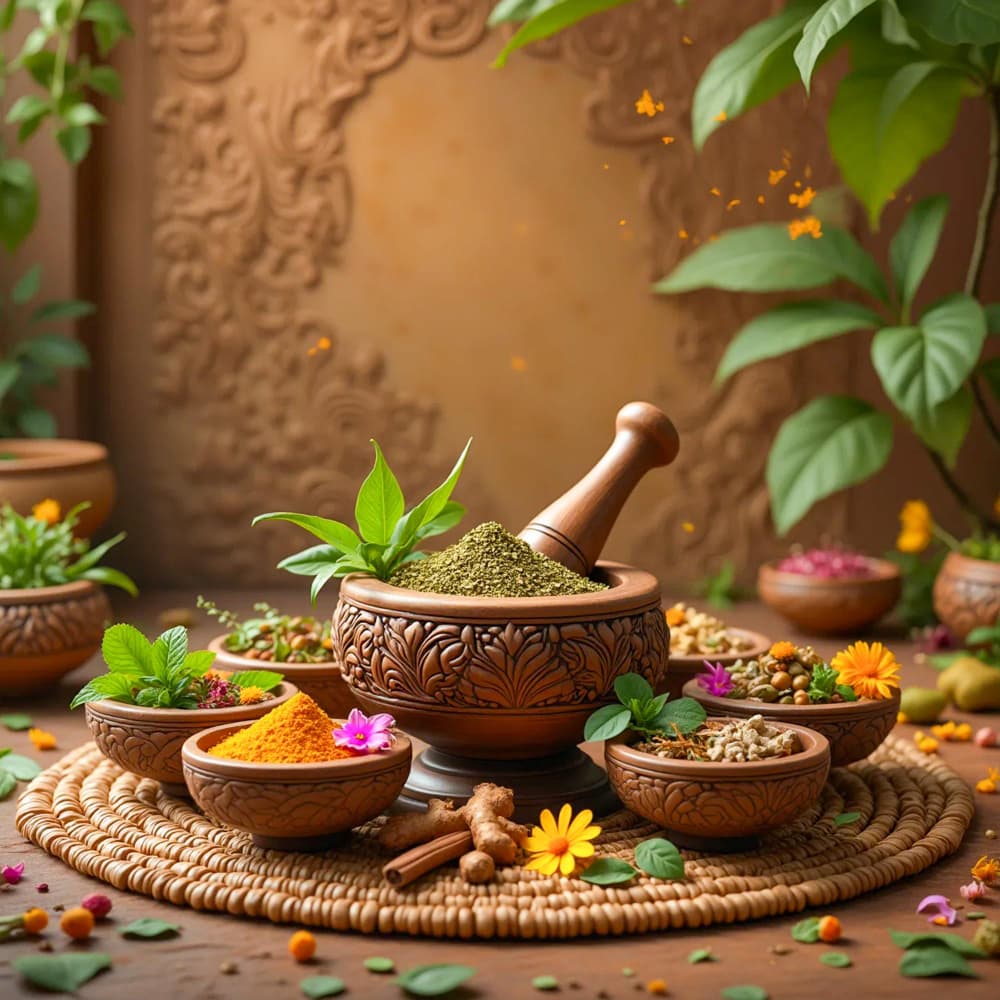
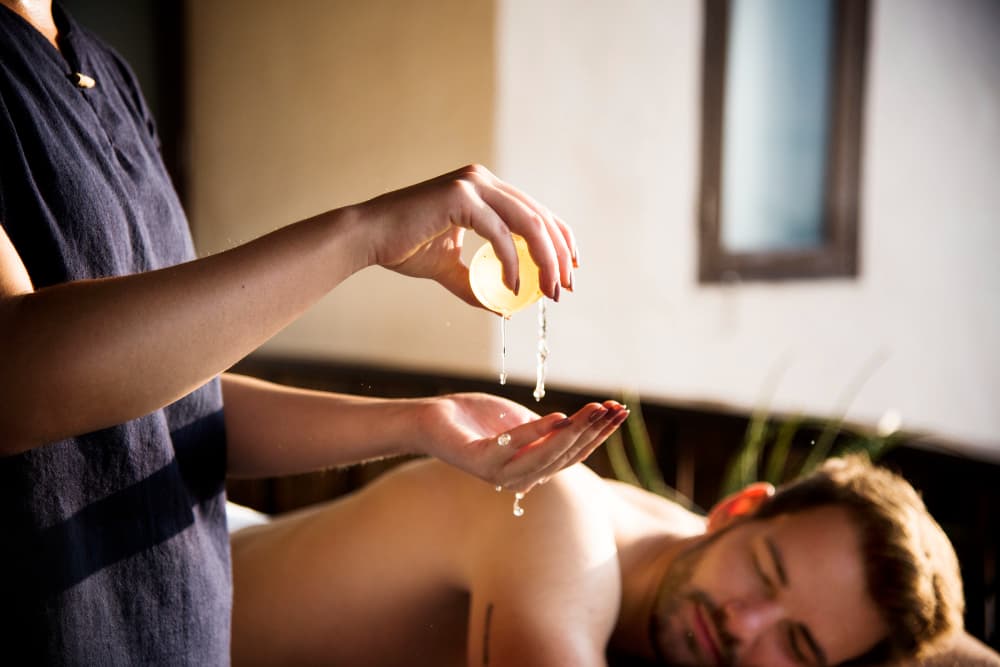
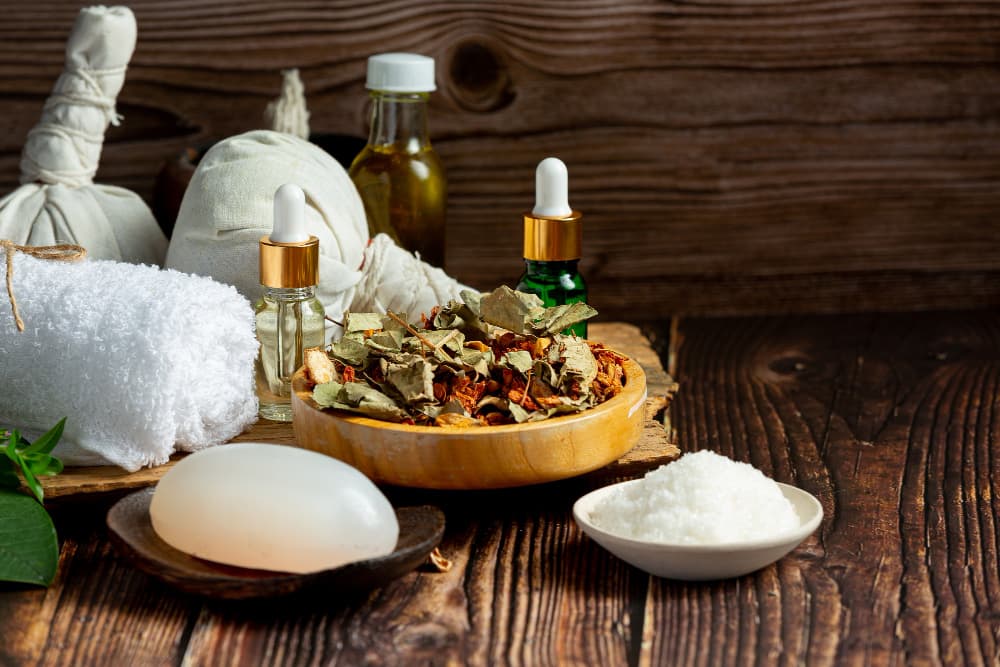
Over 100 classical medicated oils (Taila) and medicated ghees (Ghrita) used in Panchakarma — Mahanarayan Taila for joints, Kshirabala for nerves, Brahmi Ghrita for mind. Our in-house pharmacy prepares these fresh. The quality of the medicated oil is directly responsible for the depth of healing. We never substitute with commercially produced oils when classical preparation is required.
- Classical Taila
- In-house pharmacy
- Fresh prepared
Swedana (heat therapies)
Multiple forms of medicated steam — Bashpa Sweda (steam box), Nadi Sweda (localised steam), Pinda Sweda (herbal bolus), Patra Pottali — each targeting specific tissues and conditions with different herb combinations. Swedana before Basti and Virechana significantly enhances the procedure's depth and the patient's comfort. We never skip this step.
- Bashpa Sweda
- Pinda Sweda
- Patra Pottali
Classical decoctions (Kashaya)
Internally administered herbal decoctions are prescribed alongside external procedures — they open channels, digest Ama, and prepare the GI tract for Virechana or Basti. Formulations like Dashamoola, Triphala, Punarnavadi are classical standbys with thousands of years of documented use. The internal and external aspects of Panchakarma work together. Procedures alone without correct internal medicines produce partial results.
- Dashamoola
- Triphala
- Punarnavadi
Pathya Ahara (therapeutic diet)
Diet during and after Panchakarma is not an afterthought — it is a clinical tool. Specific foods are prescribed and contraindicated based on the procedure type, the patient's condition, and the phase of treatment. The Samsarjana Krama (post-procedure refeeding protocol) is one of Ayurveda's most precise clinical tools — it re-establishes Agni systematically without shocking the system.
- Samsarjana Krama
- Agni-restoring
- Phase-specific
Modern diagnostics to monitor progress
Blood tests, X-rays, and clinical assessments before, during, and after Panchakarma track objective improvement — falling inflammation markers, improving metabolic parameters, better imaging findings. We measure, not just feel. HbA1c improvements in diabetic patients after Panchakarma, reducing ESR in RA patients — these are documented and reviewed at each follow-up.
- HbA1c
- ESR
- Imaging
Seasonal Panchakarma
Ayurveda recommends Panchakarma twice yearly — at the seasonal junctions — as preventive care for healthy individuals. This maintains the body's balance before disease takes hold, and is the foundation of Ayurvedic longevity care. Patients who do seasonal Panchakarma consistently report fewer illnesses, better energy, and slower ageing — across all age groups.
- Twice yearly
- Preventive
- Ritucharya
What's available for you here
Our Panchakarma wing is purpose-built for clinical therapeutic procedures, not wellness tourism.

Panchakarma OPD
Daily OPD consultations — Prakriti assessment, Panchakarma prescription, Swarnaprashan administration, and follow-ups. Mon–Sat, 9 AM – 2 PM. Walk-in & appointment available.
Male & Female Therapy Suites
Separate, purpose-built therapy suites for male and female patients — warm, calm environments with proper therapy tables and copper-lined Droni for procedures.
In-house Ayurvedic Pharmacy
Fresh medicated oils, ghees, and decoctions prepared on campus — we do not use commercially produced substitutes for classical preparations. Pharmacist-supervised.
IPD — Panchakarma Admission
Dedicated Panchakarma IPD rooms for 14-day and 21-day intensive courses — private rooms, 24-hr nursing, and procedure scheduling without travel.
Swarnaprashan Programme
Monthly Pushya Nakshatra Swarnaprashan camps — open to all children 0–16. Pre-registration required. 1,000+ doses administered annually.
Diagnostics
On-campus pathology (100+ tests), X-Ray, and ECG for pre-Panchakarma assessment and post-treatment monitoring. Same-day reports.
What our patients say
Book Your Appointment
Ready to start your healing journey?
Schedule your appointment today,
Email - info@ishanayurved.com
Doctors in Panchakarma
Our physicians combine classical Ayurvedic training with modern clinical insight to deliver integrated, evidence-informed care.


Related conditions we treat
Skin & Hair
Psoriasis, Eczema, Hair Loss
Digestive Health
Acidity, IBS, Liver Care
Mind & Stress
Anxiety, Insomnia, Burnout
Metabolic & Lifestyle
Diabetes, Obesity, Thyroid
Seek medical attention if you experience any of the following
Contact us immediately if you notice any of these signs during or after Panchakarma:
- Severe vomiting during Vamana — call immediately
- Dizziness or fainting post-procedure
- Fever during Panchakarma course
Frequently Asked Questions
No. The vast majority of procedures are deeply relaxing — warm oil massages, steam therapy, gentle enemas. Vamana (therapeutic vomiting) is the most physically demanding procedure, but is carefully supervised and used only when specifically indicated. Most patients describe Panchakarma as one of the most restful experiences of their lives.
7-day short courses for acute or first-time patients. 14-day standard courses for most chronic conditions. 21-day intensive courses for deep-rooted or complex disorders. The duration is decided by your physician based on your condition, Prakriti, and digestive strength.
Both are available. OPD Panchakarma is suitable for patients who live nearby and can come daily. IPD (14–21 day admission) is recommended for patients from out of town, those who need intensive protocols, or those who want maximum benefit without work-life interruption. IPD courses are typically more effective because diet and rest are controlled.
Yes, in most cases. Tell your physician about all conditions and medicines at the first consultation. Certain conditions (active fever, pregnancy, very low weight) are contraindications for some procedures. Most chronic disease patients can safely undergo Panchakarma — it is in fact specifically designed for them.
Your physician will provide a specific daily diet plan. Generally: light, warm, freshly cooked food. No raw vegetables, no heavy proteins, no alcohol. The diet changes daily as your digestive strength (Agni) is restored. Following the diet exactly is as important as the procedures themselves.
Yes. Ishan is CGHS empanelled and works with 40+ insurers. Cashless and reimbursement available for Panchakarma procedures and IPD stays. Contact reception at 9818180933.